




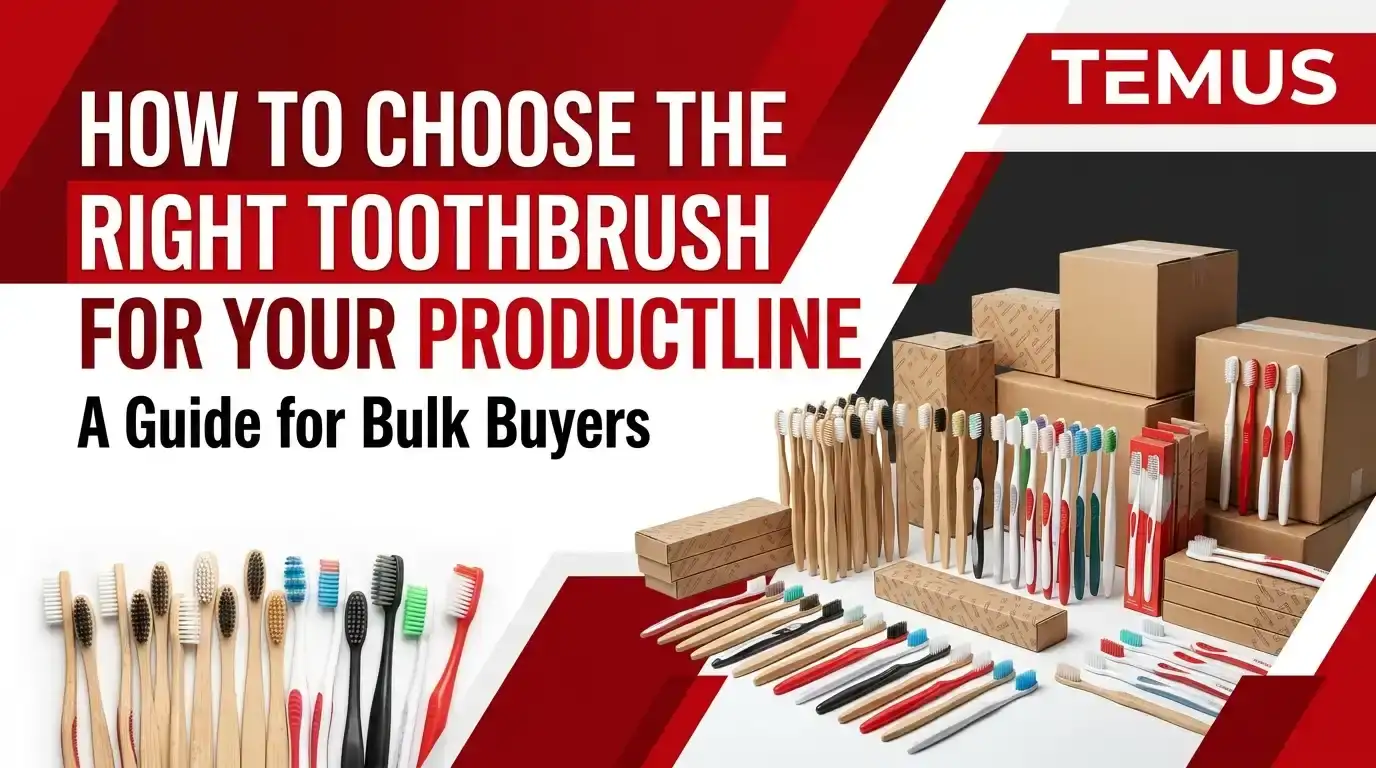
For importers, wholesalers, distributors, retail...
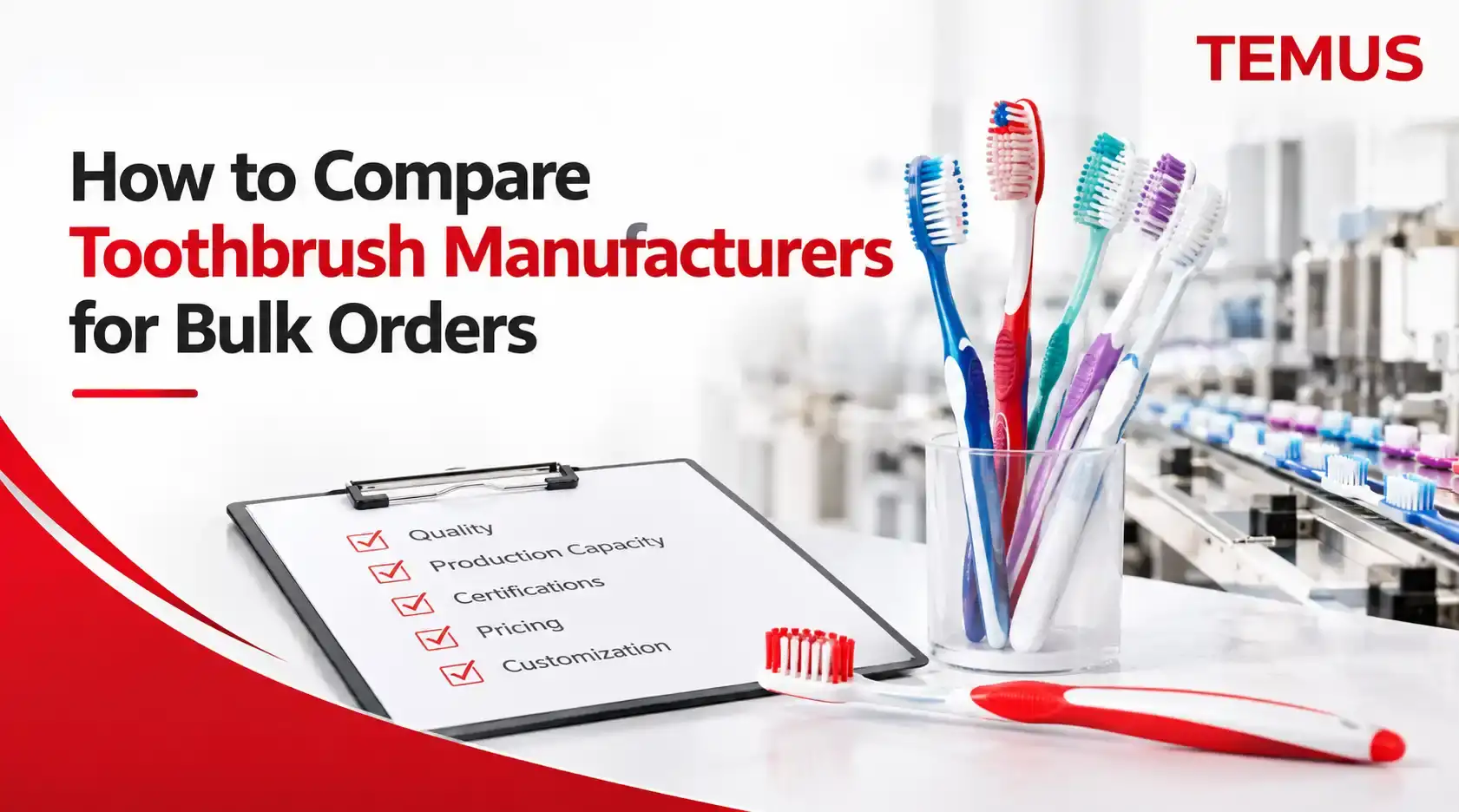
Choosing the right toothbrush manufacturer is important for buyers planning bulk orders. Importers, wholes...
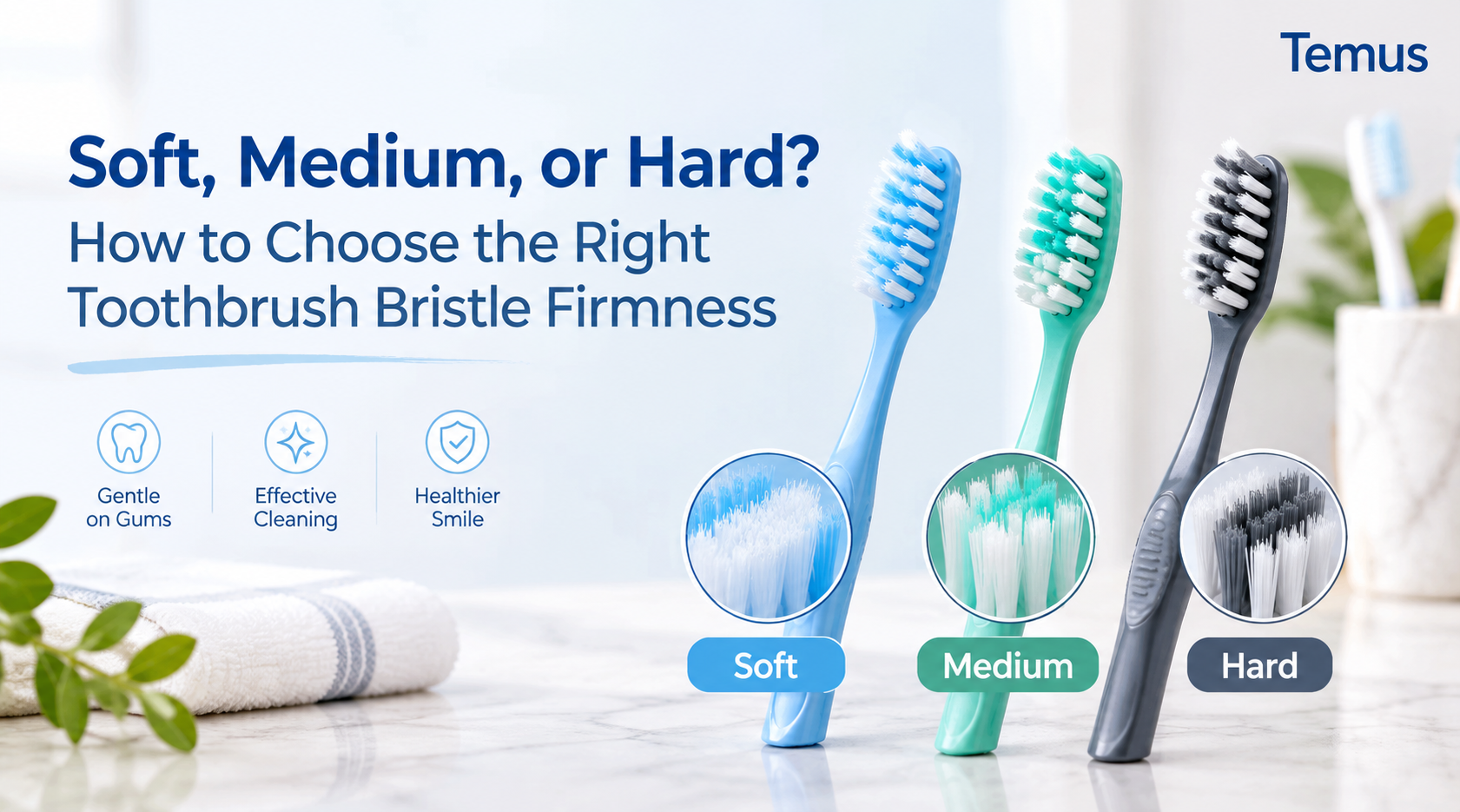
Bristle firmness is one of the smallest specs on a toothbrush sp...
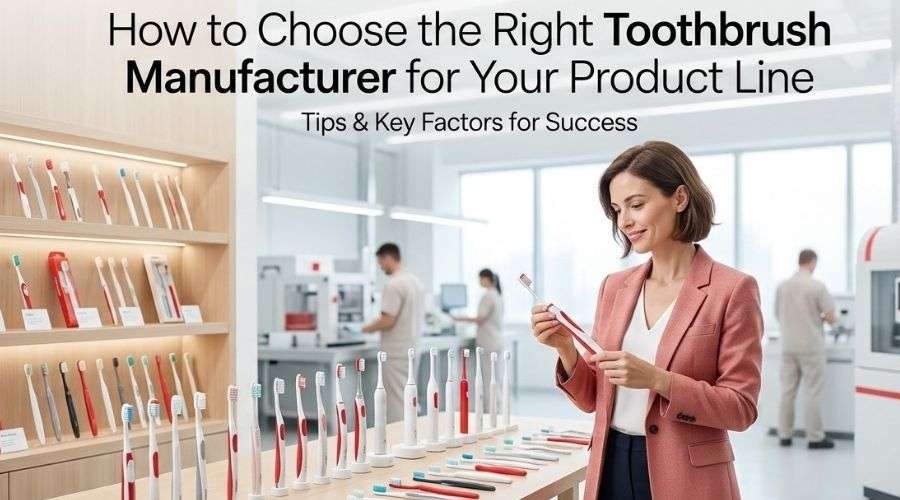
Picking a toothbrush manufacturer sounds simple until you are the one responsible for an assortment that customers will actu...
For importers, wholesalers, distributors, retailers, and private label brands, choosing the right toothbrush products is an important part of building a competitive product line. TEMUS provides toothbrush solutions for businesses looking to develop suitable products for their target markets. Bulk purchasing requires more than comparing prices between suppliers. Buyers also need to consider the target market, toothbrush type, bristle firmness, brush head, handle design, product quality, packaging, customization, MOQ, and production capacity. A suitable product range should meet customer expectations while also supporting your pricing and distribution strategy. By reviewing these factors before placing an order, bulk buyers can reduce product selection mistakes and build a more practical toothbrush range for their market. 1. Start by Defining Your Target Toothbrush Market Before selecting individual toothbrush models, bulk buyers should first understand the customers they want to serve. Different customer groups can have different expectations regarding toothbrush size, bristle firmness, design, packaging, and price. A retailer selling everyday personal care products may need a broad range of affordable toothbrushes, while a hotel supplier may focus more on simple packaging and large volume orders. Defining the target market first makes it easier to select products that have a clear purpose within your overall product line. Identify Your Main Customer Group The first step is to identify the main customer group for your toothbrush products. Your customers may include adults, children, families, hotels, dental clinics, supermarkets, pharmacies, online retailers, or promotional product buyers. Each segment can require different product specifications and price points. For example, children's toothbrushes normally require different dimensions and designs than adult toothbrushes, while hotel buyers may prioritize simple packaging, consistent supply, and competitive bulk pricing. Understanding the customer group helps you avoid selecting products without a clear market purpose. Understand the Price Range of Your Market Price positioning is another important factor when developing a toothbrush product line. Some markets focus heavily on affordable everyday products, while others have customers who are willing to pay more for improved design, packaging, customization, or other product features. Bulk buyers should understand the expected retail price before selecting products because the purchase price must leave enough room for shipping, distribution, marketing, and retailer margins. A product that looks attractive at the factory level may not be suitable if its final selling price is too high for the target market. Match the Product With Customer Demand Your product selection should also be based on actual customer demand rather than simply choosing every available toothbrush model. Importers and distributors can review previous sales, customer feedback, competitor products, market trends, and retailer requirements to identify useful product categories. If customers mainly purchase affordable family toothbrushes, adding many premium models may create unnecessary inventory. A balanced product line should include products with clear differences in design, features, price, or target customer so that every SKU has a practical purpose. 2. Choose the Right Toothbrush Type for Your Product Line Once the target market is clear, buyers can decide which toothbrush types should be included in the product range. A successful product line does not necessarily need dozens of similar models. Instead, buyers should select toothbrushes that cover important customer needs and different market positions. Depending on the business, the range may include adult toothbrushes, kids' toothbrushes, specialty products, promotional toothbrushes, or customized models. Selecting the right mix can help distributors manage inventory while giving retailers enough variety to serve different customer groups. Adult Toothbrushes Adult toothbrushes can form the main part of a general retail or wholesale product range. Buyers can compare different head sizes, bristle firmness options, handle designs, colors, and packaging styles when selecting these products. Basic adult toothbrushes can target price-sensitive consumers, while ergonomic handles, improved designs, or customized packaging can help create mid-range and premium options. Instead of selecting several models that look almost identical, distributors should choose adult toothbrushes that have meaningful differences and are designed for specific customer preferences or price segments. Kids Toothbrushes Kids' toothbrushes can be an important category for retailers and distributors serving families. These products generally use smaller dimensions and designs suitable for younger users, with features such as smaller brush heads, soft bristles, easy grip handles, and attractive colors. Depending on the target market, buyers may also consider age-specific designs and customized packaging. When adding children's toothbrushes to a product line, distributors should make sure the products have clear differences from adult models and meet the relevant product and market requirements. Specialty and Promotional Toothbrushes Specialty and promotional toothbrushes can provide additional opportunities for businesses that serve hotels, clinics, events, travel businesses, and promotional campaigns. These products may be selected based on packaging, branding, size, design, or specific customer requirements rather than standard retail demand. For example, a hotel supplier may need simple individually packed toothbrushes for guest rooms, while a promotional buyer may require logo printing and customized colors. Understanding the intended application helps buyers choose specialty products that fit their sales channels without creating unnecessary inventory. 3. Select the Right Bristle Firmness Bristle firmness is one of the most important product specifications when selecting toothbrushes for a wholesale or retail range. Different customers may prefer different brushing experiences, so distributors should understand the available firmness options before finalizing their product mix. Buyers should also consider how bristle firmness fits their target market, product positioning, and customer expectations. Instead of treating firmness as a minor specification, it should be included in the product selection process and clearly defined in the product specifications provided to the manufacturer. Soft Toothbrush Bristles Soft bristles can be an important option for product lines aimed at customers who prefer a gentler brushing experience. When selecting soft bristle toothbrushes, buyers should also check the consistency of the bristle trimming, attachment, overall finishing, and product quality. A soft bristle product should still provide consistent manufacturing quality across the order. For distributors, adding a clearly defined soft bristle option can help create product variety without requiring a completely different toothbrush design for every customer segment. Medium Toothbrush Bristles Medium bristles can be considered for general-purpose toothbrush products and may fit mainstream retail ranges depending on the requirements of the target market. Bulk buyers should still review the exact specifications and intended positioning before choosing this option. When comparing medium bristle toothbrushes from different manufacturers, buyers should pay attention to bristle consistency, trimming, attachment, head design, and overall product finishing. These details can influence how the finished product looks and feels when it reaches retailers and end customers. Hard Toothbrush Bristles Hard bristles should be considered carefully as part of a toothbrush product strategy. Buyers should understand the expectations of their target market and the applicable product requirements before adding such products to a range. The purpose should not be to offer every possible firmness simply to increase the number of SKUs. Instead, distributors should select products that have a clear market purpose and can be supported by appropriate specifications, quality checks, and customer information. For a more detailed discussion of bristle selection, buyers can review Soft, Medium, or Hard? How to Choose the Right Toothbrush Bristle Firmness. This article can provide additional information about comparing different bristle firmness options, while this product selection article focuses on how that decision fits into the wider B2B purchasing process. 4. Compare Toothbrush Head Designs and Sizes The toothbrush head is another important factor that bulk buyers should consider before placing an order. Different head sizes and shapes can help create product variation within a range, but buyers should avoid adding multiple models that provide almost the same customer value. Head dimensions, shape, bristle arrangement, and overall design should match the intended product positioning. Retailers and distributors should also make sure that the selected specifications are clearly communicated to the manufacturer so that production remains consistent across future orders. Standard Toothbrush Heads Standard toothbrush heads can work well for general retail products and value-focused product lines. They can provide a familiar design for customers while allowing buyers to focus on other specifications such as bristle firmness, handle design, color, and packaging. For distributors, standard head designs can also simplify product selection when the goal is to build a practical range with competitive pricing. However, buyers should still review the actual sample before approving production to confirm the head size, finishing, bristle arrangement, and overall quality. Compact Toothbrush Heads Compact toothbrush heads can provide another product variation for buyers who want to offer different design options. These products may be positioned differently from standard models and can help a retailer create a more diverse range without changing every product specification. When considering compact designs, bulk buyers should evaluate the head dimensions, bristle arrangement, handle balance, packaging requirements, and target customer. The important point is to choose a compact model because it serves a specific market need rather than simply adding another SKU. Head Shape and Bristle Arrangement The shape of the brush head and the arrangement of the bristles can also influence product differentiation. Buyers may encounter different head shapes, bristle layouts, trimming styles, and design options when comparing manufacturers. Instead of focusing only on appearance, importers should define the specifications they require and evaluate samples before approving a large order. Consistency is particularly important for repeat orders because retailers and distributors need the same product specifications to remain stable across different production batches. Product Feature Basic Product Mid-Range Product Premium Product Head Design Standard Improved shape Specialized design Bristles Standard options Multiple options Advanced arrangement Handle Basic Improved grip Premium ergonomic design Packaging Simple Retail packaging Premium packaging Target Market Mass market General retail Premium customers 5. Choose the Right Toothbrush Handle Design and Material The toothbrush handle is another major product selection factor because it affects appearance, grip, differentiation, and overall product positioning. A simple handle may be suitable for an economy product, while a more carefully designed handle can support a mid-range or premium product. Bulk buyers should consider the handle shape, grip area, material, surface finishing, color options, and customization possibilities. These details should be included in the product specification so that the manufacturer understands exactly what is expected before production begins. Consider Handle Shape and Grip Handle shape and grip can help differentiate toothbrushes within the same product category. Buyers can compare straight handles, ergonomic designs, grip sections, different lengths, and other available options depending on the manufacturer's capabilities. When reviewing samples, distributors should look at the overall finishing and consistency of the handle rather than judging the design from product images alone. If a retailer plans to position a toothbrush as a more premium product, the handle should support that positioning through its design, finishing, packaging, and overall presentation. Compare Handle Materials Bulk buyers should also ask manufacturers about the materials used for the toothbrush handle and the relevant product specifications. Material selection can affect appearance, durability, manufacturing cost, and customization options. Rather than selecting a material only because it is inexpensive, buyers should consider whether it fits the intended product positioning and market requirements. Samples can help buyers evaluate the handle's surface, finishing, strength, shape consistency, and overall appearance before making a large purchasing commitment. Match Handle Design With Your Brand Position The handle design should support the overall brand and product positioning. A simple handle with standard colors may work well for a value-focused product, while a customized shape, branded color, or improved grip can help differentiate a private label range. Buyers should consider the complete product rather than evaluating the handle separately. The handle, bristles, brush head, packaging, colors, and branding should create a consistent product identity that makes sense for the target retail market. 6. Consider Toothbrush Quality Before Ordering in Bulk Product quality should be evaluated before a large toothbrush order is placed because quality problems can become expensive when multiplied across thousands of units. Bulk buyers should establish clear quality expectations and communicate them to the manufacturer before production. Important areas can include bristle attachment, trimming, handle finishing, dimensions, color consistency, packaging, and general appearance. A clear quality standard also makes it easier to compare samples from different manufacturers and decide which supplier can consistently meet the required specifications. Check Bristle Quality and Attachment Bristle quality should be checked carefully during sample evaluation. Buyers can review whether the bristles are consistently trimmed, properly attached, and evenly arranged according to the agreed product specification. Any visible defects should be discussed with the manufacturer before production approval. For repeat orders, distributors should also ask how the manufacturer maintains consistency between production batches. Consistent bristle quality is particularly important for retailers because noticeable differences between products can affect customer satisfaction and create problems with product returns or complaints. Inspect Handle Quality Handle quality should also be evaluated before approving a bulk order. Buyers should inspect the surface finishing, handle shape, grip area, dimensions, color consistency, and visible defects. If the product has a customized handle, the sample should be compared carefully with the approved design. Importers should also check several samples rather than relying on a single unit because one sample may not show the consistency of an entire production batch. A broader sample review gives buyers a better understanding of manufacturing quality. Request Samples Before Bulk Production Requesting product samples is an important step before placing a large order. Samples allow buyers to evaluate the actual toothbrush rather than making decisions based only on photographs, descriptions, or quotations. Importers can compare samples against their required specifications and identify changes before production begins. If the toothbrush includes customized colors, branding, packaging, or special design requirements, sample approval becomes even more important. The final approved sample should serve as a clear reference for the production order. 7. Decide Whether You Need Standard or Customized Toothbrushes Bulk buyers should decide early whether standard products or customized toothbrushes are more suitable for their business. Standard models can simplify purchasing and may be appropriate for distributors who want established products with straightforward specifications. Customized toothbrushes can provide stronger brand differentiation but may require additional planning, higher MOQs, customized packaging, and longer preparation. The right choice depends on order volume, target market, budget, branding goals, and the manufacturer's ability to support the required customization. When Standard Toothbrushes Make Sense Standard toothbrushes can be useful when buyers want a simpler purchasing process, faster product selection, and established product designs. They may also work well for distributors who are testing a new market or adding toothbrushes to an existing product range. Standard products can reduce the need for extensive product development and customization. However, buyers should still evaluate samples, quality, MOQ, packaging, pricing, and supply capacity before placing an order, because standard products can still differ significantly between manufacturers. When Custom Toothbrushes Are Better Customized toothbrushes can be a better option for brands and retailers that want to create a more distinctive product range. Depending on the manufacturer's capabilities, customization may include handle colors, handle designs, logo printing, bristle colors, packaging, and other product details. Customization can help a brand create a consistent identity across its personal care products. However, buyers should understand the minimum order requirements, production process, approval stages, and additional costs before requesting a customized product. Consider Your Expected Order Volume Order volume should be considered before choosing customization. A small buyer may find that a fully customized toothbrush requires a higher MOQ than the business can comfortably sell, while a large distributor may benefit from customized products because the order volume can support the additional production requirements. Buyers should discuss MOQ, tooling or development requirements, packaging quantities, lead times, and repeat order expectations with the manufacturer before finalizing the product specifications. 8. Compare Toothbrush Packaging Options Packaging can influence how a toothbrush is displayed, transported, and sold. For retail products, packaging also provides space for branding, product information, barcodes, and other market-specific details. Bulk buyers should therefore consider packaging at the same time as the toothbrush itself instead of treating it as a final step. The packaging format should match the target market, distribution channel, product price, and branding strategy. Buyers should also confirm packaging dimensions and quantities because these details can affect shipping and storage requirements. Individual Toothbrush Packaging Individual packaging can be useful for retail toothbrushes and products that need separate presentation. Depending on the market, buyers may consider different packaging formats such as boxes, sleeves, or other retail packaging options. The packaging should protect the product while presenting the brand and required product information clearly. Before approving production, buyers should review the packaging sample along with the toothbrush because the final package should match the product dimensions and maintain a professional appearance. Multi Pack and Family Packaging Multi-pack packaging can be useful for supermarkets, family-focused retailers, and distributors targeting customers who prefer purchasing several toothbrushes together. Buyers can use different pack sizes to create additional product options without developing completely different toothbrush designs. However, distributors should consider whether the expected sales volume supports each pack size. Too many packaging variations can increase SKU complexity, storage requirements, and inventory management challenges, so each format should have a clear commercial purpose. Private Label Packaging Private label packaging can help retailers and brands build a stronger identity around their toothbrush products. Buyers may customize packaging with their brand name, logo, colors, product information, barcode, and other required details. Before production, the buyer should approve the packaging design and confirm that all required information is correct. It is also important to discuss MOQ and lead time because customized packaging may require additional production planning compared with standard packaging. 9. Check MOQ, Pricing, and Production Capacity Pricing is important for bulk buyers, but the lowest unit price should not be the only factor used to select a toothbrush supplier. The final purchasing cost can include the toothbrush itself, customized components, packaging, printing, shipping, and other order-related expenses. Buyers should compare quotations based on the complete order requirements rather than comparing one unit price without considering product specifications. This approach provides a clearer picture of the actual cost and helps distributors protect their expected margins. Understand Minimum Order Quantity Minimum order quantity can vary depending on whether the buyer chooses a standard or customized toothbrush. Factors such as handle colors, logo printing, packaging, bristle colors, and special product designs can influence the required order quantity. Before requesting a quotation, buyers should provide clear specifications and ask for the MOQ for each option. This prevents misunderstandings later and helps the buyer determine whether the product can be managed within the planned inventory budget. Compare Total Product Cost When comparing suppliers, buyers should calculate the total expected purchasing cost rather than looking only at the quoted toothbrush price. Product specifications, packaging, customization, shipping, and order quantity can all affect the final cost. A supplier with a slightly higher unit price may still provide better value if the product quality, packaging, customization, and consistency are stronger. For distributors, the goal should be to find a suitable balance between purchase cost, product quality, customer demand, and expected selling price. Confirm Production Capacity and Lead Time Production capacity and lead time are important for businesses that expect repeat orders. A supplier may provide an attractive initial quotation but struggle to maintain the required volume during future orders. Buyers should therefore ask about normal production schedules, lead times, repeat order planning, and the ability to handle larger quantities. Confirming these details before starting a business relationship can reduce supply problems and help distributors plan inventory more accurately. 10. Evaluate Toothbrush Manufacturers Before Placing Your Order After defining the product requirements, buyers need to evaluate whether the selected manufacturer can consistently produce the required toothbrushes. Supplier evaluation should include manufacturing capabilities, product range, customization options, quality control, samples, MOQ, pricing, and production capacity. Buyers should compare manufacturers based on their ability to meet the complete order specification rather than choosing a supplier simply because it offers the lowest quotation. A reliable manufacturing relationship can become particularly important when distributors need repeat orders with consistent product specifications. Check Product Experience and Manufacturing Capabilities Buyers should review the manufacturer's product range and manufacturing capabilities before placing a bulk order. Important questions include whether the manufacturer produces the required toothbrush type, supports the needed bristle options, provides customization, and can handle the expected order volume. Buyers should also ask how product quality is checked during production. A manufacturer that clearly explains its capabilities and processes can make the purchasing process easier and reduce uncertainty during product development. Compare Samples, Specifications, and Quotations When comparing multiple manufacturers, buyers should evaluate samples alongside the written product specifications and quotations. A lower quotation is not useful if the sample does not meet the required quality level. Similarly, a high-quality sample may not be commercially suitable if the MOQ or total purchasing cost is too high. Comparing these factors together gives buyers a more complete view of each supplier and helps them choose a manufacturer that fits both product requirements and business goals. Ask the Right Questions Before Ordering Before confirming an order, buyers should ask the manufacturer several practical questions about products, production, customization, and supply. These questions can help identify possible problems before money is committed to a large order. What toothbrush types do you manufacture? What bristle options are available? What is the MOQ for standard products? What is the MOQ for customized products? Can you customize the handle and packaging? Can you provide product samples? What quality checks are performed during production? What is the expected production lead time? Can you support repeat bulk orders? Can you maintain consistent product specifications across future orders? For additional supplier evaluation information, buyers can read How to Compare Toothbrush Manufacturers for Bulk Orders. That article can provide a deeper comparison framework, while this article focuses on choosing the right products for the overall product line. 11. Use This Toothbrush Selection Checklist Before Ordering A clear selection checklist can help importers and distributors avoid missing important details before placing a bulk toothbrush order. Buyers should record the required product specifications, target market, quantity, packaging, customization, pricing, and supplier information in one document. This makes supplier comparisons easier and gives manufacturers a clear understanding of the required products. A written checklist is particularly useful when a buyer is ordering multiple toothbrush models because it reduces the risk of confusing specifications between different SKUs. Selection Factor What Bulk Buyers Should Check Target Customer Adults, children, families, clinics, hotels, and other markets Toothbrush Type Standard, kids, specialty, promotional, or customized Bristle Firmness Required firmness and available options Brush Head Size, shape, design, and bristle arrangement Handle Shape, grip, material, color, and durability Quality Bristle attachment, trimming, finishing, and consistency Customization Logo, colors, handle, bristles, and packaging Packaging Individual, multipack, retail, or private label MOQ Minimum quantity for standard and customized orders Pricing Product, packaging, customization, and shipping costs Samples Sample approval before bulk production Supplier Manufacturing capabilities and quality controls Lead Time Production and expected delivery schedule After completing the checklist, buyers should turn the information into a clear product specification before requesting final quotations. This document can include product dimensions, bristle requirements, handle design, colors, packaging, quantity, branding, and delivery expectations. Providing the same specifications to several manufacturers makes it easier to compare quotations fairly. It also gives the selected manufacturer a clear reference that can be used during sample approval and production. 12. Common Mistakes Bulk Buyers Should Avoid Bulk purchasing mistakes can become expensive because even a small product specification problem can affect a large number of units. Buyers should therefore identify common risks before placing an order. The most common problems include choosing suppliers only because of low prices, ordering too many similar products, skipping sample evaluation, ignoring MOQ, and selecting products without understanding customer demand. A structured selection process can help distributors reduce these risks and create a more manageable product range. Choosing Only Based on the Lowest Price Selecting a toothbrush supplier only because of the lowest price can create problems if product quality, packaging, lead time, or consistency does not meet expectations. A low unit price does not automatically represent better business value. Buyers should compare the complete quotation together with product samples, specifications, MOQ, customization, quality control, and production capacity. The goal should be to find a commercially suitable product that can provide consistent value throughout the business relationship. Ordering Too Many Similar Products Another common mistake is adding too many toothbrush models that have almost identical features. This can increase inventory complexity without giving customers meaningful choices. Distributors should review every SKU and ask whether it serves a different customer group, price level, design preference, or product requirement. A smaller range with clear differences can often be easier to manage than a large collection of products that compete with each other for the same customers. Skipping Sample Evaluation Skipping samples can create unnecessary risk when ordering large quantities. Product photographs and descriptions may not show details such as handle finishing, bristle attachment, dimensions, color consistency, and packaging quality. Buyers should request samples and review them carefully before approving production. If several models are being ordered, each important model should be checked against its own specifications. Sample approval can help identify changes before they become expensive production problems. Ignoring MOQ and Repeat Order Requirements Buyers should consider not only the first order but also how the product will be purchased in the future. A product with a high MOQ may create inventory problems if sales are slower than expected. Similarly, a supplier that cannot support repeat orders may create supply gaps later. Before approving a product, buyers should understand the MOQ, lead time, production capacity, and expected repeat order process so that the product can remain commercially practical. Choosing Products Without Understanding the Target Market A toothbrush can be well manufactured and still perform poorly if it does not match customer expectations. Buyers should understand the target market before selecting products, including preferred price levels, designs, packaging, product types, and purchasing habits. A product designed for premium retail may not work well in a price-sensitive market, while a basic product may not meet the expectations of a premium brand. Product selection should always begin with the customer and market requirements. 13. Build a Balanced Toothbrush Product Line A balanced toothbrush product line should provide customers with useful choices without creating unnecessary SKU complexity. Instead of selecting many products that differ only slightly, distributors can create clear product levels based on price, design, features, target customers, and packaging. A balanced range can include entry-level products, mainstream products, premium options, and specific categories such as kids' toothbrushes. This approach allows retailers to serve different customer groups while keeping the overall product structure easier to understand and manage. Create Entry-Level Products Entry-level toothbrushes can target price-sensitive customers who mainly need a practical everyday product. These models can use simpler handle designs, standard packaging, and straightforward product specifications. The focus should be on maintaining acceptable product quality while keeping the purchasing cost suitable for the target market. For distributors, entry-level products can provide volume opportunities, particularly when selling through supermarkets, general retailers, or markets where customers compare products primarily on affordability. Add Mainstream Products Mainstream toothbrushes can become the core of a product line because they are designed for a wider group of customers. These products can include improved handle designs, different bristle options, better packaging, and more attractive product presentation. Buyers should select mainstream products based on expected customer demand and retail positioning. Since these products may represent a larger part of the product range, distributors should pay particular attention to consistent quality, reliable supply, competitive pricing, and repeat order capacity. Add Premium or Customized Products Premium and customized toothbrushes can help brands and retailers create stronger differentiation. These products may include customized handle designs, branded colors, logo printing, premium packaging, or other product features. They can target customers who are less focused on the lowest price and more interested in design, branding, and product presentation. However, buyers should carefully evaluate customization costs and MOQ before adding premium products to the range so that inventory remains commercially manageable. Product Level Main Features Target Buyer Entry Level Basic handle, standard packaging Price-sensitive market Mid Range Better grip, improved design General retail customers Premium Customized design and premium packaging Premium brands Kids Smaller head, soft bristles, attractive designs Children and families 14. Final Tips for Choosing the Right Toothbrush Product Line Choosing the right toothbrush product line requires a combination of market research, product evaluation, supplier comparison, and cost planning. Bulk buyers should first identify their target customers and then select toothbrush types, bristle options, head designs, handle materials, packaging, and customization according to those requirements. Samples should be reviewed before production, while MOQ, pricing, lead time, and supplier capacity should be confirmed before placing the final order. This structured approach can help buyers create a product range that is easier to sell and manage. The most important steps are to identify the target market, select suitable toothbrush types, choose the right bristle firmness, compare brush head and handle designs, define quality requirements, decide between standard and customized products, select suitable packaging, confirm MOQ and pricing, request samples, and evaluate manufacturers carefully. Buyers should also consider future repeat orders because a successful product line needs consistent supply. By balancing customer demand, product quality, pricing, customization, and supplier capabilities, businesses can build a stronger toothbrush range for wholesale and retail markets. Frequently Asked Questions How do I choose the right toothbrush for my product line? To choose the right toothbrush, bulk buyers should first identify their target customers and expected price range. They should then compare toothbrush types, bristle firmness, brush head size, handle design, materials, quality, packaging, customization, MOQ, and supplier capabilities. What toothbrush bristle firmness should bulk buyers choose? The right bristle firmness depends on the intended market, product positioning, and customer requirements. Bulk buyers should evaluate the available options and make sure the selected products have consistent bristle quality and appropriate specifications. What should I check before buying toothbrushes in bulk? Before buying toothbrushes in bulk, buyers should check product specifications, bristle quality, brush head design, handle material, product finishing, packaging, MOQ, pricing, customization options, samples, production lead time, and supplier capacity. How should I compare toothbrush manufacturers? Buyers should compare toothbrush manufacturers based on product quality, manufacturing capabilities, samples, MOQ, customization options, quality control, pricing, production capacity, and lead time. The lowest quotation should not automatically determine the final decision because product consistency and reliable supply are also important for long-term business.
READ FULLChoosing the right toothbrush manufacturer is important for buyers planning bulk orders. Importers, wholesalers, distributors, retailers, and private label brands need more than a low product price. They should compare toothbrush quality, bristle materials, MOQ, customization options, production capacity, packaging, quality control, and lead times before placing an order. At TEMUS, A proper comparison helps buyers find a manufacturer that can meet their product requirements and support regular supply. What to Check When Comparing Toothbrush Manufacturers When comparing toothbrush manufacturers, buyers should first understand what each manufacturer can provide. Product specifications, manufacturing capacity, quality control, and experience with bulk orders can affect the final quality and cost of a product line. Product Quality and Toothbrush Specifications Start by checking the basic specifications of the toothbrushes. Look at the handle material, handle design, brush head size, bristle material, bristle firmness, bristle density, and overall finishing. These details can affect how the toothbrush feels and performs during use. Buyers should also ask whether the manufacturer can produce different specifications for different markets. For example, a retailer may need soft bristles for a sensitive care product, while another brand may require medium bristles for a general oral care range. Clear product specifications make it easier to compare samples and quotations from different manufacturers. Manufacturing Capacity and Bulk Order Experience Production capacity is another important factor for B2B buyers. A manufacturer may offer a competitive price but may not have enough production capacity for large or repeat orders. Ask about production capacity, average lead time, and experience with bulk orders before making a decision. If you plan to reorder the same toothbrush regularly, choose a manufacturer that can maintain consistent production and product specifications. Stable production can help businesses manage inventory and avoid delays when demand increases. Quality Control and Production Standards Ask manufacturers about their quality control process before placing a bulk order. A reliable process may include checking raw materials, inspecting products during production, and checking finished toothbrushes before shipment. Buyers should also ask about available product testing and certifications when these are required for their target market. This is especially important when importing toothbrushes into countries with specific product or packaging requirements. Read this blog Soft, Medium, or Hard? How to Choose the Right Toothbrush Bristle Firmness Compare Toothbrush Manufacturers by Pricing and Customization Price matters for bulk buyers, but it shouldn't be the only comparison point. A low unit price may come with a higher MOQ, limited customization, basic packaging, or different product specifications. Buyers should compare the complete quotation and understand what is included before comparing prices. MOQ and Bulk Toothbrush Pricing Minimum order quantity can vary between toothbrush manufacturers. Some manufacturers may accept smaller trial orders, while others may require a larger production quantity for customized products. When requesting a quotation, provide the expected order quantity, toothbrush specifications, bristle requirements, packaging needs, and destination market. This allows manufacturers to provide a more useful quotation. Buyers should also ask whether the quoted price includes packaging, customization, and other production costs. OEM and Private Label Options Brands that want to sell toothbrushes under their own name should check the manufacturer's OEM and private label capabilities. Custom production may include logo printing, custom colors, handle designs, bristle options, packaging, and retail boxes. Before selecting a manufacturer, ask which parts of the toothbrush can be customized and whether there are additional costs for custom molds, printing, packaging, or sample development. This helps buyers calculate the actual cost of launching a customized product. Packaging and Order Requirements Packaging is an important part of a bulk toothbrush order, especially for retailers and private label brands. Ask manufacturers about individual packaging, multi-piece packs, retail boxes, carton quantities, labels, barcodes, and other packaging options. Good packaging planning can also help with transportation and warehouse handling. Buyers should confirm packaging dimensions and carton information before finalizing a large order. How to Evaluate a Toothbrush Manufacturer Before Placing an Order After comparing product specifications and prices, buyers should evaluate the manufacturer itself. This includes checking samples, communication, production support, lead times, and shipping arrangements. Request Samples Before a Bulk Order Samples allow buyers to check the actual product before committing to a large quantity. Inspect the toothbrush handle, bristles, brush head, finishing, packaging, and overall product quality. If you are comparing several toothbrush manufacturers, request similar samples from each supplier. Using the same specifications makes it easier to compare product quality and identify differences before placing a bulk order. Check Communication and Production Support Clear communication is important when working with an international manufacturer. The supplier should be able to provide clear information about specifications, MOQ, pricing, samples, production schedules, packaging, and shipping. For customized orders, communication becomes even more important. Product drawings, logo files, packaging designs, and specifications should be confirmed before production starts to reduce the risk of mistakes. Review Lead Time and Shipping Support Ask about sample lead time, production lead time, and estimated shipping time. Buyers should understand the complete order timeline instead of looking only at the manufacturing period. It is also useful to ask whether the manufacturer has experience exporting to your target market. Understanding shipping methods, carton details, and required export documents can make the ordering process easier. Read this guide How to Choose the Right Toothbrush Manufacturer for Your Product Line Questions to Ask Toothbrush Manufacturers Before Ordering Before placing a bulk order, prepare a list of questions for each manufacturer. This helps buyers collect comparable information and identify differences between suppliers: What is your MOQ for bulk toothbrush orders? Which bristle materials and firmness levels do you offer? Can you produce custom toothbrush designs? Do you provide OEM and private label services? Can you provide samples before bulk production? What quality control process do you follow? What is your production lead time? What packaging options are available? Can you support repeat and large volume orders? What export and shipping support do you provide? How to Choose the Right Toothbrush Manufacturer for Your Bulk Order Comparing toothbrush manufacturers requires more than checking the lowest quotation. B2B buyers should review product quality, bristle specifications, MOQ, pricing, customization, production capacity, quality control, packaging, lead time, and communication. For a first order, requesting samples and confirming all specifications before production can reduce purchasing risks. Buyers should also keep a clear record of quotations and product requirements so different manufacturers can be compared using the same criteria. A manufacturer that can consistently meet your product specifications and bulk supply requirements can become a useful long-term supplier for your toothbrush business. Whether you are a wholesaler, distributor, retailer, or private label brand, a detailed supplier comparison can help you plan your order with greater clarity. FAQs About Comparing Toothbrush Manufacturers What should I compare when choosing a toothbrush manufacturer? Compare product quality, bristle materials, MOQ, pricing, customization, production capacity, quality control, packaging, lead time, samples, and export support. Looking at these factors together gives B2B buyers a clearer view of the complete supplier offer. Can toothbrush manufacturers provide private label products? Many manufacturers offer private label production, but available services can vary. Buyers should confirm options for custom handles, colors, logos, bristles, packaging, and other product specifications before placing an order. Should I request toothbrush samples before a bulk order? Yes. Samples allow buyers to check the actual toothbrush quality and compare products from different manufacturers. They can also confirm bristle firmness, handle design, finishing, packaging, and other specifications before bulk production. How can I get a quotation from a toothbrush manufacturer? Provide the manufacturer with your required quantity, toothbrush design, bristle material and firmness, packaging requirements, customization needs, and destination market. Detailed information helps the manufacturer prepare a more accurate quotation.
READ FULLBristle firmness is one of the smallest specs on a toothbrush spec sheet, but it carries some of the biggest risk for a wholesale buyer. Get it right, and you stock a product that keeps customers healthy and coming back. Get it wrong, and you risk returns, bad reviews, and even complaints tied to gum recession, enamel wear, or tooth sensitivity. This guide breaks down what actually separates soft, medium, and hard bristles, what the dental research says about each one, and which options belong in your product lineup. Soft Bristles: The Standard Choice for Most Users Soft-bristled toothbrushes are the default recommendation from dentists for most adults and children. That is not a marketing claim. The American Dental Association and similar dental bodies worldwide recommend soft bristles as the safe default for daily brushing, because they clean effectively without wearing down enamel or irritating gum tissue. Soft bristles are flexible enough to bend into the gum line without causing trauma, and they still remove plaque at a rate comparable to firmer bristles when paired with correct brushing technique. For a wholesale buyer, this makes soft bristles the safest volume product in your lineup, and the one least likely to generate a return or complaint. Source the Right Toothbrush Bristle Firmness Discuss soft, medium, or hard bristle options, materials, packaging, private label, OEM, and bulk toothbrush requirements with our team. Request a Quote Soft Bristles for Sensitive Gums Buyers sourcing for consumers with sensitive gums, existing gum disease, or a history of heavy-handed brushing should look for products labeled “soft” or “extra-soft.” Some manufacturers go a step further with tapered bristle tips, which flex more gently against tissue. That feature works well as a differentiator on a premium line, since it signals a real product upgrade rather than a label change. Soft Bristles for Children Children’s toothbrushes need softer bristles than adult versions. A child’s gums are more delicate, and children have not yet developed consistent brushing control. Pediatric lines should be clearly separated from adult products on packaging, with bristle softness called out as a core selling point rather than a footnote. Medium Bristles: A Balanced but Niche Option Medium bristles sit between soft and hard on both cleaning feel and risk. Some consumers find them more satisfying, since the extra firmness gives a stronger sensation of a thorough clean, and some reviews describe them as feeling more effective at removing plaque. When Medium Bristles Make Sense Medium bristles can work for daily use by consumers who already brush with light pressure and good technique. The risk shows up when that technique slips. Research on brushing force shows that medium and hard bristles are more likely than soft bristles to damage enamel and irritate gums, and the cause is usually not the bristle itself but the pressure behind it. Most people who damage their gums with a firmer brush are pressing too hard, not using a defective product. What to Consider Before Stocking Medium Bristles If you decide to carry medium-bristle brushes, pair them with clear usage guidance on the packaging, including a warning against heavy pressure. Some manufacturers add a pressure-sensor indicator on the handle, a small design feature that tells the user when they are brushing too hard. For your catalog, medium bristles fill a specific niche: buyers who find soft brushes unsatisfying but are willing to follow instructions for safe use. They need more consumer education than soft bristles do, so factor that into your packaging and marketing spend. Hard Bristles: Limited Use, Higher Risk Hard bristles are the smallest and riskiest category in most oral care portfolios, and dental professionals increasingly discourage them for everyday use. Why Hard Bristles Are Rare Today A small number of manufacturers still produce hard-bristle brushes for specific jobs, such as removing heavy surface stains or cleaning dentures. Outside those narrow uses, hard bristles have mostly disappeared from mainstream product lines, because the health case for them is weak and the liability case against them is strong. Enamel and Gum Wear Risk Clinical research links hard-bristle, high-pressure brushing to faster enamel wear and gum recession, and to wedge-shaped defects at the base of the tooth in long-term users. For a wholesaler weighing whether to stock hard bristles, the decision usually comes down to one question: does the niche demand for this product outweigh the return and complaint risk it carries? For most catalogs, the answer is to keep hard bristles as a small, clearly labeled specialty item rather than a mainstream SKU. Bristle Material Matters Too Firmness is only half the spec. The material a bristle is made from affects how it performs, how long it lasts, and how premium it feels to the end buyer. Nylon Bristles Most toothbrush bristles today are made from nylon, valued for its durability, flexibility, and resistance to moisture. Nylon bends under pressure during brushing and springs back to shape afterward, which is part of why it replaced natural bristle brushes decades ago. Within nylon, different grades perform differently. Nylon 6/12, for example, absorbs less water than nylon 6/6 and holds its stiffness better when wet, which gives a more consistent brushing feel over the life of the product. Tynex Filaments Tynex is a well-known premium nylon filament brand used across high-quality toothbrushes. It was originally a DuPont product and is now manufactured and sold by Celanese, following Celanese’s 2022 acquisition of DuPont’s filament business. Tynex filaments are valued for consistent diameter control, wear performance, and manufacturing yield, and some variants add visual features like diamond-cut shapes or color effects. Specifying Tynex on a private-label order is a straightforward way to signal quality to retail partners who recognize the brand name. Lower-Cost Alternatives Buyers serving price-sensitive markets can source generic nylon or copy-nylon filaments at a lower cost than branded options like Tynex. The trade-off is real: lower-grade filaments tend to fray sooner, lose their shape faster, and offer a less consistent safety profile from batch to batch. The savings on unit cost can be offset by a higher return rate and, over time, by damage to your brand’s reputation with retail partners. How Manufacturers Test and Grade Bristle Quality Understanding how suppliers test bristles helps you evaluate them and verify their claims before you place a purchase order. Diameter and Firmness Testing Reliable manufacturers measure bristle diameter against a fixed tolerance, since even small variations affect both comfort and cleaning performance. They also run stiffness tests using standardized methods, which is how a supplier can back up a “soft” or “medium” label with data instead of a guess. End Rounding Bristle tips must be rounded and smooth, a finishing step known as end rounding. A poorly finished bristle has a sharp tip that can cause micro-abrasions on gum tissue with regular use. Ask suppliers directly whether end rounding is inspected on every batch or only on samples. Batch Consistency Manufacturers pull random samples from each production batch to check for defects before shipment. This is what lets you promise a retail partner that every toothbrush in a shipment meets the same standard, not just the sample you approved. Safety Testing Before Shipment Bristles should pass safety testing for cytotoxicity, heavy metals, and phthalates before they reach a retail shelf, in line with global safety regulations. A reputable supplier will hold certifications such as ISO 13485 or will document FDA compliance for the US market, and should be willing to share that documentation without being asked twice. When to Replace a Toothbrush Even a well-made toothbrush wears out. Educating your retail customers on replacement timing builds trust and drives repeat purchases of your product, not a competitor’s. Frayed or Bent Bristles Once bristles fray, bend, or splay outward, the brush loses its ability to reach into tight spaces between teeth and along the gumline. Worn bristles clean less effectively and can irritate gum tissue rather than protect it. The Three-Month Rule Dentists generally recommend replacing a toothbrush every three months. Heavy brushers or people who apply more pressure than recommended may need to replace theirs sooner, since their bristles wear out faster. After Illness Replacing a toothbrush after a cold, flu, or other illness is also good practice, since bacteria and viruses can survive on bristles for a period after use. Sharing this guidance with retail partners, so it reaches the end consumer, positions your brand as informed rather than purely transactional. Questions to Ask Your Toothbrush Supplier A strong supplier relationship protects both your business and your customers, and the right questions early on prevent costly problems later. Quality Control Documentation Ask for documentation of the supplier’s testing protocols, including what standards they test against and how they maintain batch-to-batch consistency. A supplier confident in their process will share this without hesitation. Private Label Customization Ask what customization options are available for bristle firmness, handle design, and packaging, and whether the supplier offers multiple material grades to match different price points in your catalog. Material Sourcing and Traceability Ask where bristle filaments come from and whether the supplier uses branded material, such as Tynex, or a generic alternative. Knowing the source of the filament gives you a clearer basis for pricing and quality decisions than the finished brush alone. Bristle Firmness at a Glance Firmness Best For Cleaning Power Key Consideration Soft Sensitive gums, children, everyday use High, with correct technique The clinically recommended default for most users Medium General daily use by experienced brushers Moderate to high Requires proper technique and consumer education to avoid damage Hard Stain removal, denture cleaning Lower for routine brushing Higher risk of enamel and gum damage; best kept as a specialty item Conclusion Your bristle firmness decisions affect real customers, not just SKUs on a purchase order. Soft bristles remain the safest, highest-volume choice for most buyers. Medium bristles serve a real but narrower niche, and they need supporting education to be sold responsibly. Hard bristles carry the highest risk and belong in a small, clearly labeled segment of your catalog rather than your core lineup. Stocking the right mix, backed by the testing and sourcing questions above, protects your margins and your customers at the same time. More Blog Like this How to Choose the Right Toothbrush Manufacturer for Your Product Line
READ FULL